Digital vs Traditional Art: Finding Your Creative Path
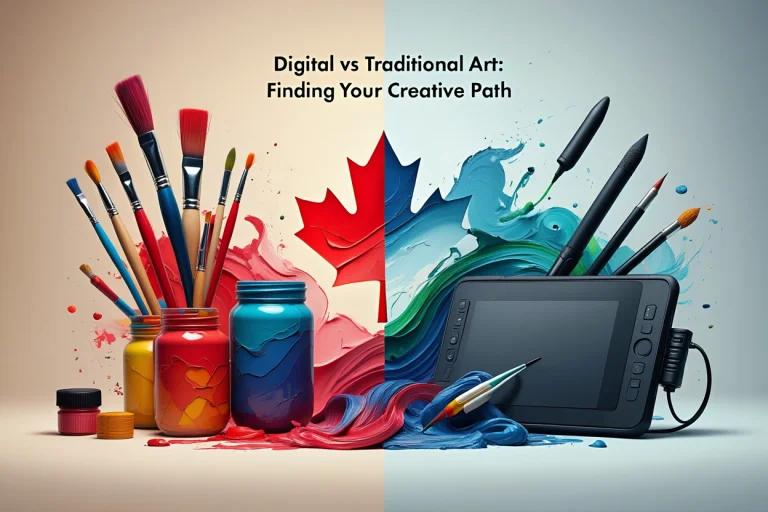
For centuries, artists have relied on traditional tools—brushes, canvas, ink, and paper—to bring their visions to life. In recent decades, digital technology has introduced entirely new ways to create, opening doors to tools once unimaginable. For Canadian artists, the choice between digital and traditional art—or a blend of both—has become an exciting part of the creative journey.
But which path is right for you? Let’s explore the strengths, challenges, and hybrid opportunities each medium offers.
Traditional Art: Rooted in Tactile Experience
Traditional art carries a sense of history and craftsmanship. The physicality of brushstrokes, the texture of canvas, and the smell of oil paints create an immersive process.
Advantages:
-
Tactile connection: Direct engagement with materials enhances presence and mindfulness.
-
Unique originals: Every piece is one-of-a-kind, often carrying greater collectible value.
-
Established tradition: Galleries, collectors, and art schools often favour physical works.
-
Therapeutic process: The sensory experience of painting or drawing supports relaxation and focus.
Challenges:
-
Material costs: Quality supplies (paints, canvases, paper) can be expensive in Canada.
-
Space needs: Studios require storage and proper ventilation for certain mediums.
-
Limited editing: Mistakes may be harder to fix compared to digital tools.
Traditional methods remain timeless and deeply rewarding, particularly for those who value process as much as outcome.
Digital Art: Expanding Creative Possibilities
Digital mediums have exploded in popularity, especially among younger artists and professionals working in illustration, animation, and design.
Advantages:
-
Infinite tools: Software like Procreate, Photoshop, or Krita offers brushes, textures, and colours without physical limits.
-
Undo and layers: Artists can experiment freely, correcting mistakes instantly.
-
Efficiency: Faster workflows support professional projects with tight deadlines.
-
Accessibility: Digital works are easily shared online, reaching audiences worldwide.
-
Eco-friendly: No paints, solvents, or canvases to dispose of.
Challenges:
-
Lack of tactile feedback: The screen cannot replicate the feel of brush on canvas.
-
Hardware costs: Tablets, styluses, and software subscriptions can be pricey.
-
Perception gap: Some collectors still undervalue digital pieces compared to traditional works.
-
Screen fatigue: Long hours of digital work can strain the eyes and body.
Digital mediums empower artists with flexibility and reach, making them ideal for professionals aiming to share their work globally.
Hybrid Approaches: The Best of Both Worlds
Many contemporary artists combine digital and traditional techniques to expand their creative possibilities.
Examples of hybrid workflows:
-
Sketching compositions digitally before painting them traditionally.
-
Scanning watercolour textures to integrate into digital illustrations.
-
Using digital platforms to test colour palettes, then applying them on canvas.
-
Enhancing or editing traditional works digitally for prints or publications.
Hybrid methods allow artists to retain the authenticity of physical creation while benefiting from the versatility of digital tools.
Choosing Your Creative Path
There is no single “right” choice—your path depends on your goals, resources, and creative personality.
Questions to ask yourself:
-
Do I value tactile, meditative experiences with materials? (Traditional)
-
Do I need speed, flexibility, and digital reach? (Digital)
-
Am I open to blending both approaches for maximum expression? (Hybrid)
Canadian context: Many artists adapt based on season and setting—painting plein air during summer months, then shifting to digital tools indoors through winter. This flexibility allows creativity to flow year-round.
Conclusion: Freedom in Choice
The debate between digital and traditional art isn’t about replacing one with the other. Instead, it’s about finding the medium—or combination—that aligns with your voice. By exploring both, you’ll gain insight into your preferences, strengths, and artistic goals.
At Zen Canvas Studio, we encourage artists to experiment across mediums, embracing both timeless traditions and innovative tools to discover their own unique creative path.
Curious to explore both digital and traditional methods? Join a Creative Workshop at Zen Canvas Studio, where we introduce hybrid approaches to help you find the balance that fits your style.